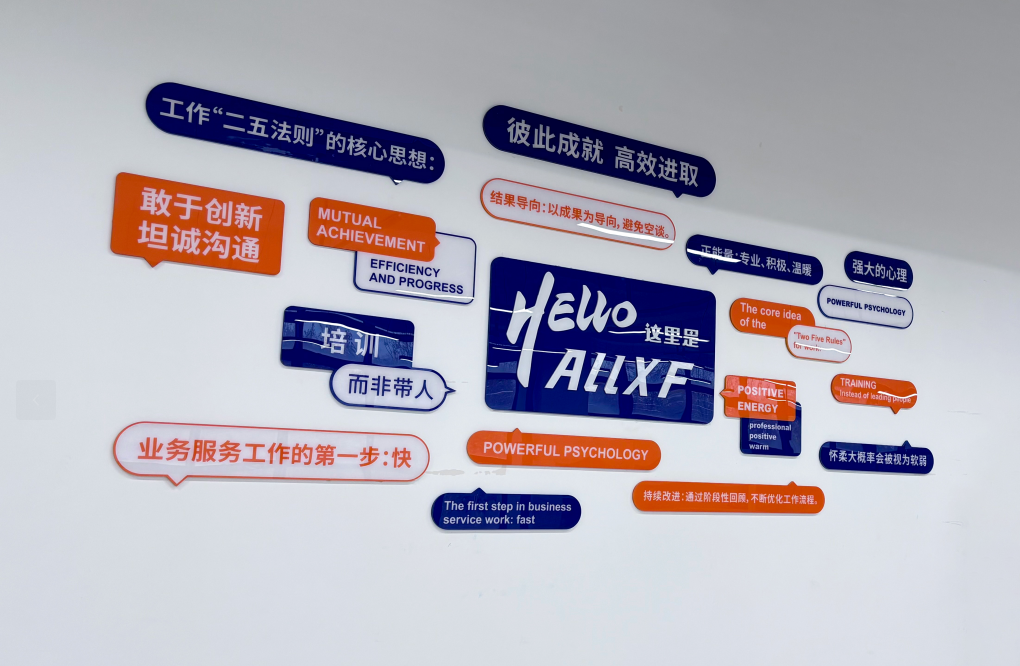

南京先飞机器人有限公司崇尚创新,重视专业积累、自我管理和组织协同,致力于通过持续提高效率,为客户提供可靠的产品与服务,同时为成员保留合理的休息、思考和成长空间。
为便于客户、合作方、应聘者及公司成员理解我们的工作方式,现就加班及相关安排作如下说明。
一、 以创新和组织能力提高效率,以可靠成果体现工作投入
公司坚持通过技术与产品积累、工具改进、流程优化和团队协同,提高工作效率与交付能力。持续积累的经验和能力,应当帮助我们减少重复劳动、反复沟通和临时补救,使工作更加有序、成果更加可靠。
我们重视解决了什么问题、创造了什么价值、兑现了什么承诺,不以加班时长衡量工作贡献,也不以长期延长工作时间作为参与市场竞争的主要方式。
对于正常业务,公司原则上通过合理排期、资源配置和过程管理完成。遇到效率问题,应当持续改善方法、分工和协作,避免形成 “工作做不完就加班,下一次仍然靠加班” 的惯性。
二、不要求 996,短期内不计划采用两班倒、三班倒模式
公司不实行、不要求 996 工作模式,不将常态化强制加班作为日常管理方式,也不通过隐性要求迫使成员长期超时工作。
成员是否积极、负责,应当结合工作成果、履职情况、专业进步和协作表现进行判断。正常下班、依法休假,不应成为负面评价的依据。
公司现阶段不主张采用两班倒、三班倒的常态化工作模式,短期内也没有相关计划。业务承接、交付承诺和资源安排,应当以实际工作模式和服务能力为基础。
对于个别项目确需协调的特殊服务时段,公司将结合具体情况提前安排。一次特殊支持,不代表公司建立了常态化全天候服务机制,也不应成为后续持续追加工作时间的默认依据。
三、尊重个人自主探索,审慎安排确有必要的加班
从形成原因看,额外工作投入主要包括个人自主投入和公司组织安排两类。
1. 尊重个人自主投入,同时防止形成隐性要求
成员可能基于兴趣、责任感或个人安排,开展新问题探索、经验整理、工作总结和深入思考。公司尊重这些自主选择,也鼓励成员重视方法、节奏和身心状态。
自主探索不能演变为对全体成员的统一要求,公司也不以非工作时间的投入多少评价成员的成长意愿和工作态度。
对于尚未完成的工作,应当先检查任务量、分工、方法、资源及协作条件。不能将“工作没有完成”直接认定为个人应当自行加班,更不能长期依靠成员额外投入弥补工作安排的问题。
2. 公司安排的加班,应当确有必要、目标清晰、范围适当
公司组织的加班,主要用于确有必要的集中攻关、集体创新、重要问题解决和紧急事项处理。能够通过正常排期、提前准备或资源协调解决的,应当优先采用相应方式。
必要加班应当依法协商安排,明确目标、参与人员、预计时间和后续休息,避免无关人员陪同、无明确目标等待,以及任务完成后仍持续占用时间。
创新、总结和能力建设,也应当获得正常工作时间与组织资源的支持。不能让业务占满全部工作时间,再将创新和成长一概推到下班以后。
上述分类用于说明形成原因,具体工时及加班待遇按照实际工作情况和适用规定处理,不以“自愿”“创新”等名称替代认定。
四、理解客户的紧迫与付出,通过可靠协作回应项目需求
我们理解客户在项目推进中承担的压力,也尊重合作各方为项目付出的努力。对于明确的目标、真实的困难和紧急需求,我们愿意积极沟通,共同研究解决办法。
不同团队的职责、工作安排和实现成果的方式有所不同。合作投入应当通过交付质量、履约情况和解决问题的能力体现,加班时长不宜成为衡量合作诚意的尺度。
公司原则上不因临时催促或对方已经加班,就单独为某个项目组织额外加班。确需增加支持的,应当结合项目影响、资源条件、既有承诺和成员负荷,由公司统筹评估。
具体执行中:
1. 正常需求按约定推进。明确工作范围、交付节点和沟通安排,让双方对项目进度有稳定预期。
2. 新增需求和交期调整共同评估。同步考虑资源、费用及对其他工作的影响,协商可执行的方案。
3. 我方原因造成的异常主动补救。及时组织处理、说明进展,并承担相应责任。
4. 突发重大问题及时协调。根据实际影响安排必要支持,处理后复盘原因和改进措施。
我们珍视客户的信任,也希望通过清晰的责任、透明的进度和稳定的成果,让合作各方获得持续的安全感。
五、共同减少前置等待和过程摩擦,为项目争取真正有效的时间
项目周期不仅取决于实际执行时间,也受到需求确认、商务沟通、资料准备、决策效率和变更管理的影响。
如果前期长期等待、反复讨论,最终却要求执行环节通过持续加班消化被压缩的时间,就容易形成低效循环。前置环节节省的时间,往往比末端加班挤出的时间更有价值。
我们倡导与合作方共同做好以下工作:
1. 尽早明确需求。提前确认关键参数、应用场景、交付内容和验收要求。
2. 缩短商务周期。及时推进报价、评审和条件确认,减少无效往返。
3. 明确项目边界。对新增内容和变更及时评估,避免执行范围不断扩大。
4. 减少协作等待。明确对接人与决策人,及时提供资料、样品和确认意见。
5. 合理安排交付。根据实际工作量和资源条件确定周期,为必要验证和质量保障留出空间。
这些要求同样适用于我们自身。公司应当持续改善内部审批、信息传递和跨团队协同,以共同提高合作效率。
六、必要加班之后,应当及时兑现休息与恢复安排
公司原则上鼓励并主动安排必要加班后的休息与恢复,重视通过调休等适当方式,为成员保留合理的调节空间。
对于休息日加班,原则上优先在下一周安排补休。例如,本周末为项目投入了额外时间,下周就应当相应安排休息,并同步调整任务与人员衔接。确需调整补休时间的,应当明确具体安排,避免长期积压。
安排加班时,就应当同步考虑何时休息、怎样交接、后续任务如何调整。
调休必须在实际工作中兑现。不能一边安排成员休息,一边仍按完整出勤量分配任务;也不能让成员在调休期间持续开会、处理业务,最后再通过晚上工作补回所谓“休掉的时间”。
公司依法执行适用的工时、休息休假及加班报酬规定。对于实行标准工时制的成员,休息日加班可以安排补休,不能安排补休的依法支付加班工资;工作日延时加班和法定节假日加班,应当依法支付相应加班工资,不能以调休替代。后续安排休息,也不能替代对法定工时限制的遵守。
长期依赖加班,却始终无法兑现合理休息,说明工作量、资源配置或组织方式已经失衡,应当及时调整,不能继续靠成员透支来维持。
七、为总结、思考和生活保留空间,才能持续积累组织能力
持续赶工可能挤掉复盘、工具改进和经验积累的时间,使同样的问题反复出现,最终形成更多临时补救和额外投入。
公司重视为成员保留安静思考、工作总结、专业探索和经验交流的空间。这些投入有助于将一次解决问题的经验,转化为下一次工作的能力。
如果今天的问题解决后,没有留下方法、标准或改进,下一次很可能仍然需要付出同样的额外时间。
与此同时,成员的休息、家庭和个人生活本身就应当受到尊重,不需要以能够带来更多工作成果作为前提。公司希望成员能够保持健康、稳定、有活力的工作状态,并拥有自主安排生活的空间。
八、负责人主动承担组织责任,让工作安排与上述原则保持一致
上述原则需要落实到任务分配、客户承诺和日常协作中。相关负责人应当重点承担以下责任:
1. 合理承诺。评估工作范围、资源和周期后再作承诺,避免先答应、后加压。
2. 主动协调。客户提出额外要求时,由相关负责人评估和沟通,避免让一线成员独自承受压力。
3. 统筹安排。兼顾项目需求、既有工作和成员负荷,不因催促频繁就无限调整优先级。
4. 兑现休息。主动安排调休、任务调整和必要交接,避免休息长期停留在口头承诺上。
5. 持续改进。关注加班原因是否重复、休息是否兑现、同类问题是否减少,及时改善工作方式。
成员应当做好计划、及时反馈进度,遇到困难主动提出问题和支持需求,避免长期隐瞒风险或自行透支。公司鼓励积极负责、专业协同,也要求负责人提供与任务相匹配的支持。
我们坚持以创新提高效率,以组织协同保障交付,以合理休息支持持续成长,让客户价值、成员发展与公司经营形成长期的正向循环。
先飞技术致力于无人系统底层技术持续研究与开发,以技术创新为合作伙伴创造价值!
其多传感器高性能云台、组合吊舱与集群编队三大产品系列,基于独特的创新理念和产品服务能力,深受诸多优秀智能装备企业与研究机构青睐。
官方商城:https://www.allxfstore.com/
硬件详情:https://www.allxianfei.com/
服务详情:https://www.aixianfei.com/
研发基地:南京市江宁区麒麟人工智能产业园A7栋5楼/6楼/12楼
产品基地:镇江市镇江新区中瑞生态产业园3号楼/1号楼
先飞技术拥有相关品类系统化底层技术开发能力,可提供基于私有、开源及集成类深度技术解决方案。
如您有相关技术需求,我们进一步沟通,欢迎随时光临本司!
如您有投诉或建议,可直接发送相关信息至suggest@allxianfei.com。
先飞技术,与您一同创新!
Creating Value Through Innovation & Organizational Efficiency — Our Work Approach & Overtime Principles
Nanjing Xianfei Robot champions innovation, values professional accumulation, self-management and organizational collaboration. We strive to continuously improve efficiency to deliver reliable products and services to customers, while reserving proper space for rest, reflection and growth for team members.
To help customers, partners, job applicants and internal members understand our working philosophy, we hereby issue the following statement regarding overtime and relevant arrangements.
I. Boost Efficiency via Innovation & Organizational Capabilities; Measure Contribution by Reliable Outcomes
The company consistently improves work efficiency and delivery capacity through technology and product accumulation, tool upgrades, process optimization and team collaboration. The experience and expertise we build over time shall help us cut redundant work, repeated communication and ad-hoc fixes, making work better organized and deliverables more dependable.
We focus on what problems are solved, what value is created and what commitments are fulfilled. We do not measure work contribution by overtime hours, nor rely on prolonged working hours as our primary method to compete in the market.
For regular business tasks, the company will in principle deliver work through reasonable scheduling, resource allocation and process management. When efficiency bottlenecks arise, we shall continuously refine methods, work allocation and collaboration to avoid forming a habit of “working overtime whenever tasks are unfinished and relying on overtime repeatedly”.
II. No Mandatory 996; No Plan for 2-Shift or 3-Shift Schedules in the Short Term
The company does not adopt or require the 996 work model. Mandatory regular overtime is not part of our daily management, and no implicit requirements will be imposed to force team members to work extended hours long-term.
A member’s proactivity and accountability shall be judged based on work results, performance, professional progress and teamwork. Finishing work on time and taking statutory leave shall not be treated negatively.
At this stage, the company does not advocate regular 2-shift or 3-shift rotating work patterns, and has no such plans in the near future. Business acceptance, delivery commitments and resource planning shall be built upon our actual working model and service capacity.
For special service hours required by individual projects, arrangements will be made in advance on a case-by-case basis. One-off special support does not mean the company has established a permanent round-the-clock service mechanism, nor shall it become the default basis for requiring extra working hours in subsequent work.
III. Respect Independent Personal Exploration and Arrange Necessary Overtime Prudently
In terms of causes, extra work commitment falls mainly into two categories: voluntary personal engagement and company-organized arrangements.
1. Respect voluntary personal engagement while avoiding implicit requirements
Team members may conduct research on new challenges, organize experience, summarize work and conduct in-depth thinking out of interest, sense of responsibility or personal plans. The company respects these independent choices and encourages members to pay attention to working methods, pace and physical & mental wellbeing.
Independent exploration shall not become a mandatory requirement for all members. The company will not evaluate members’ willingness to grow and work attitude by the amount of time spent outside working hours.
For unfinished work, we shall first review workload, task allocation, methodologies, resources and collaboration conditions. Failure to complete tasks shall not be directly regarded as grounds for individuals to work overtime voluntarily. Nor shall the company rely on members’ extra hours in the long run to compensate for poor work planning.
2. Company-arranged overtime must be truly necessary, clearly targeted and appropriately scoped
Company-organized overtime is reserved for essential concentrated problem-solving, collective innovation, resolution of critical issues and emergency response. Tasks solvable via regular scheduling, advance preparation or resource coordination shall be handled through those preferred approaches.
Necessary overtime shall be arranged through legal consultation, with clear objectives, participants, estimated duration and subsequent rest periods. We avoid requiring unrelated staff to stay, waiting without defined goals, or occupying time after task completion.
Innovation, summary and capability building deserve support within regular working hours and with organizational resources. Business operations shall not occupy all working hours, pushing innovation and personal development entirely to after-work hours.
This classification only explains the root causes. Actual working hours and overtime compensation are handled in accordance with real work conditions and applicable regulations. Labels such as “voluntary” or “innovation” shall not replace formal assessment.
IV. Understand Clients’ Urgency & Commitment; Respond to Project Needs via Reliable Collaboration
We understand the pressure borne by clients during project execution and respect the efforts made by all partners. For clear objectives, genuine challenges and urgent requirements, we are ready to communicate proactively and jointly explore solutions.
Teams differ in responsibilities, work schedules and delivery methods. Dedication to collaboration shall be measured by delivery quality, performance and problem-solving capability, rather than overtime hours as a gauge of sincerity.
In principle, the company will not arrange extra overtime for a project merely due to last-minute pressure or the client’s overtime work. Where extra support is truly needed, the company will conduct comprehensive assessment based on project impact, resource availability, existing commitments and team workload.
Implementation guidelines:
1. Deliver regular requirements as agreed. Clarify scope, delivery milestones and communication plans to build stable expectations for both parties on project progress.
2. Evaluate new requirements and deadline adjustments jointly. Assess resources, costs and impacts on other tasks, and negotiate feasible solutions.
3. Proactively remedy anomalies caused by our side. Take prompt action, update progress and assume corresponding liabilities.
4. Coordinate quickly for major unexpected issues. Arrange necessary support according to actual impact, and review root causes and improvement measures after resolution.
We value clients’ trust. By means of clear responsibilities, transparent progress and consistent deliverables, we aim to deliver lasting reassurance to all partners.
V. Reduce Pre-execution Waiting & Process Friction to Gain Truly Effective Project Time
Project timeline depends not only on hands-on execution time, but also requirement confirmation, business negotiation, document preparation, decision-making efficiency and change management.
A low-efficiency cycle often arises when prolonged waiting and repeated discussions in early stages force the execution phase to make up compressed time through continuous overtime. Time saved in upstream phases is usually more valuable than time squeezed out via overtime at the final stage.
We advocate completing the following tasks together with partners:
1. Clarify requirements early. Confirm key parameters, application scenarios, deliverables and acceptance criteria in advance.
2. Shorten business cycles. Expedite quotations, reviews and term confirmation to cut ineffective back-and-forth communication.
3. Define project boundaries. Evaluate new content and changes promptly to prevent continuous scope creep.
4. Minimize collaboration delays. Identify contacts and decision-makers, and provide documents, samples and feedback in a timely manner.
5. Schedule deliveries reasonably. Set timelines based on actual workload and resource capacity, reserving time for validation and quality assurance.
These rules also apply internally. The company will continuously improve internal approval, information flow and cross-team collaboration to boost overall cooperation efficiency.
VI. Timely Rest and Recovery Arrangements After Necessary Overtime
The company encourages and proactively arranges rest and recovery after necessary overtime. We value compensatory leave and other proper measures to reserve reasonable downtime for team members.
For overtime worked on rest days, compensatory leave will in principle be scheduled in the following week. For instance, if extra hours are spent on a project over this weekend, corresponding rest shall be arranged in the next week, with tasks and handovers adjusted accordingly. If the compensatory leave timeline needs modification, concrete plans must be defined to avoid long-term accumulation of owed leave.
When overtime is scheduled, planners shall simultaneously consider rest timing, task handover and adjustments to subsequent workloads.
Compensatory leave must be honored in practice. We will not assign full workload while granting leave; nor will we require members to attend meetings and handle work during leave, then make them “make up” the so-called time off by working evenings.
The company complies with applicable laws on working hours, leave entitlements and overtime compensation. For members under standard working hour schemes, overtime on rest days may be offset by compensatory leave. Where compensatory leave cannot be arranged, overtime pay shall be provided by law. Overtime on workdays and statutory holidays must be compensated with statutory overtime pay and cannot be replaced by compensatory leave. Subsequent rest arrangements also do not waive compliance with statutory working-hour limits.
Reliance on overtime without delivering reasonable rest indicates imbalance in workload, resource allocation or organizational structure. Prompt adjustments must be made instead of sustaining operations through team burnout.
VII. Reserve Space for Reflection, Review and Personal Life to Sustain Organizational Capability
Continuous rush work tends to squeeze time for retrospectives, tool optimization and knowledge accumulation. This causes recurring issues and results in more ad-hoc fixes and extra work.
The company prioritizes quiet time for reflection, work summaries, technical exploration and knowledge sharing. These efforts help turn one-off problem-solving experience into repeatable capability for future projects.
If solving a problem today leaves no methods, standards or improvements documented, the same extra work will likely be required again next time.
Meanwhile, team members’ rest, family and personal lives deserve respect in their own right, not conditional on delivering more work output. The company wishes members to maintain healthy, stable and energetic working conditions with autonomy over personal life.
VIII. Leaders Take Proactive Organizational Responsibility to Align Work Arrangements with the Above Principles
The above principles shall be implemented in task assignment, client commitments and daily collaboration. Relevant leaders shall assume the following key responsibilities:
1. Make reasonable commitments. Evaluate scope of work, resources and timelines before making promises, and avoid committing first then imposing excessive pressure later.
2. Proactively coordinate. When clients raise additional requirements, relevant leaders shall conduct assessment and communication, preventing frontline team members from bearing pressure alone.
3. Plan holistically. Balance project requirements, ongoing tasks and team workload; priorities shall not be adjusted indefinitely simply due to frequent follow-ups.
4. Honor rest entitlements. Arrange compensatory leave, task adjustments and necessary handovers proactively, so rest arrangements do not remain merely verbal promises.
5. Pursue continuous improvement. Monitor recurring overtime triggers, fulfillment of rest entitlements and reduction of similar issues, and refine working methods in a timely manner.
Team members shall make proper plans, provide timely progress updates, and actively raise problems and support requests when facing difficulties, to avoid hiding risks for long periods or overexerting themselves. The company encourages accountability and professional collaboration, and requires leaders to provide support matching task requirements.
We strive to boost efficiency through innovation, guarantee delivery via organizational collaboration, and support sustainable growth with reasonable rest. This creates a long-term positive cycle among customer value, team member development and business operation.
ALLXF is committed to the continuous research and development of underlying technologies for unmanned systems, creating value for partners through technological innovation!
Its three core product lines: Multi-sensor High-performance Gimbals, Combined Pods, and UAV Swarm Formations, are favored by many outstanding intelligent equipment enterprises and research institutions due to their unique innovative concepts and product service capabilities.
Hardware details:https://www.allxianfei.com/
Service details:https://www.aixianfei.com/
R&D Base: 5th/6th/12th Floor, Building A7, Qilin Artificial Intelligence Industrial Park, Jiangning District, NanjingProduction Base: Building 3/1, Sino-Swiss Ecological Industrial Park, Zhenjiang New District, Zhenjiang
ALLXF possesses systematic underlying technology development capabilities for related product categories and can provide in-depth technical solutions based on private, open-source and integrated technologies.
If you have relevant technical needs, we would like to communicate further with you and welcome your visit to our company at any time!If you have any complaints or suggestions, you can directly send relevant information to suggest@allxianfei.com.
ALLXF, innovating with you!